

In 2026 we are CROWDFUNDING to hit some serious goals!
Read on to learn about our past and what’s prepared us for big steps in 2026.
.
Rovira Regenerativa’s history
In 2008, Lou bought the land that would become the home of the Boodaville Association demonstration site, in the Rovira Valley of Aragón.
Bit by bit, simple infrastructure was added. Volunteers, students, neighbours and friends learned by doing – growing food, building structures, improving water systems, cooking together, all according to permaculture principles.
Often, while looking out across the valley, Lou and others would daydream about the neighbouring vineyard – farmed with tilling and chemical fertilisers – and imagine something different:
Vines growing among fruit and nut trees.
Healthy, living soil.
A thriving, resilient food system.
2019 – A Team Forms
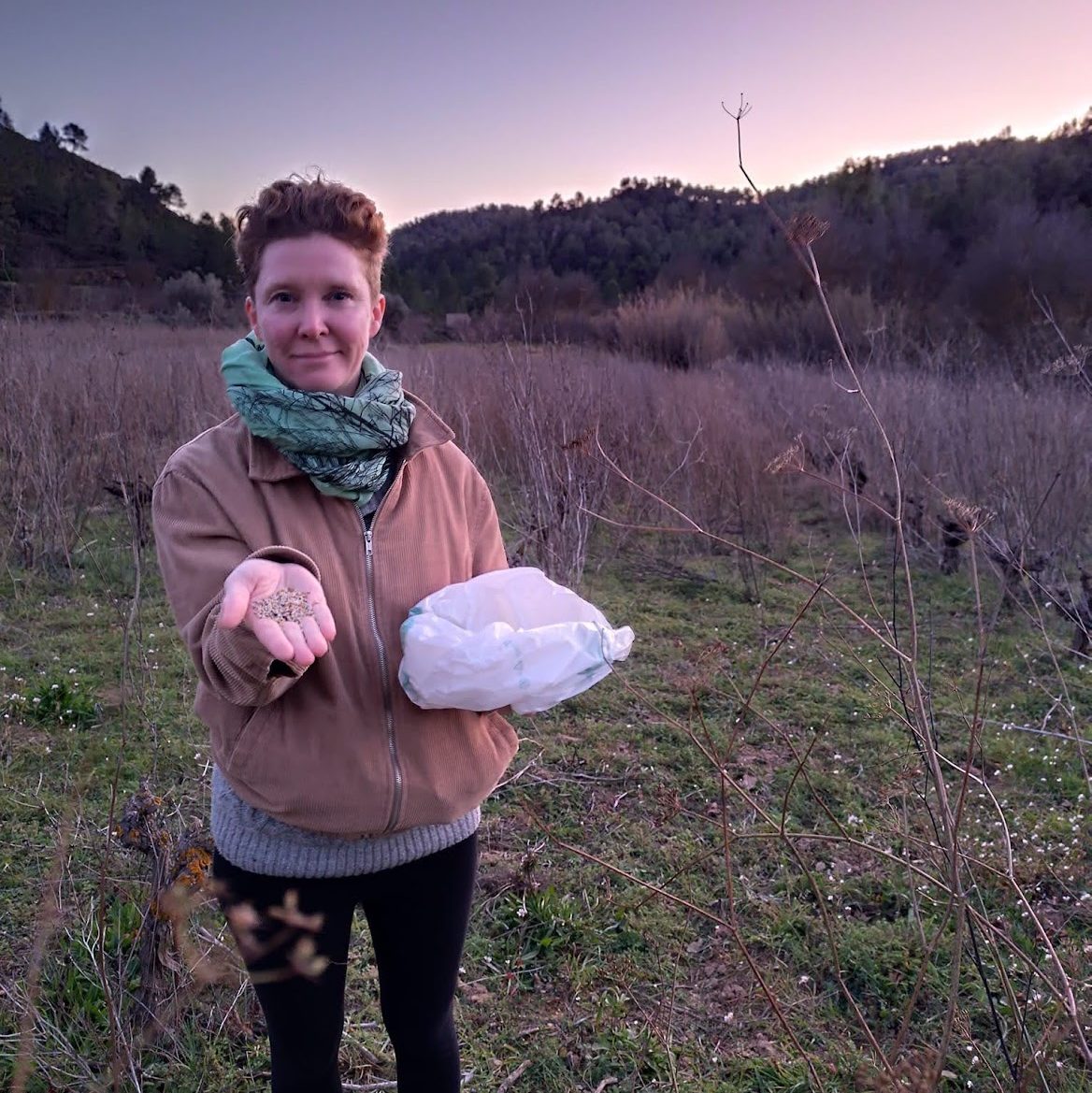
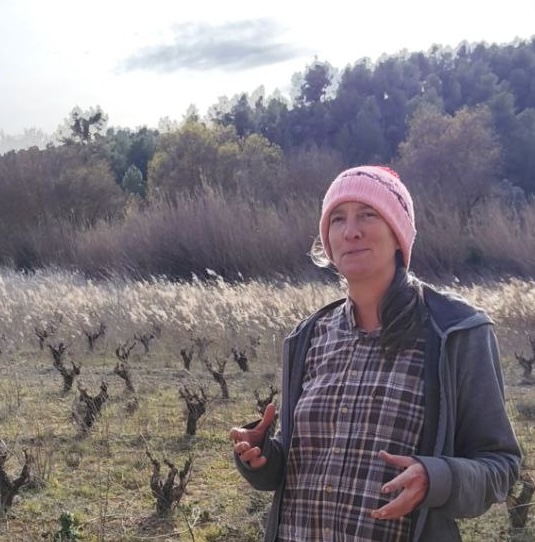
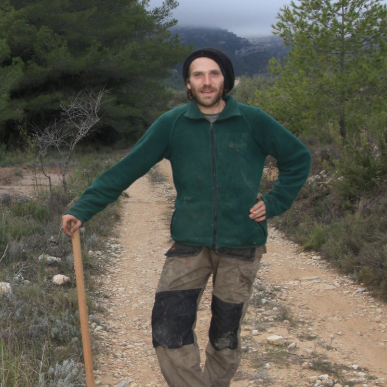

Lou felt ready to act.
A call went out to form a team motivated to build a thriving food system and education centre in the Rovira Valley. The first meeting was held in Barcelona. Nick and Angela were there from the beginning!
2020 – A Design Sprouts…and so does a Pandemic
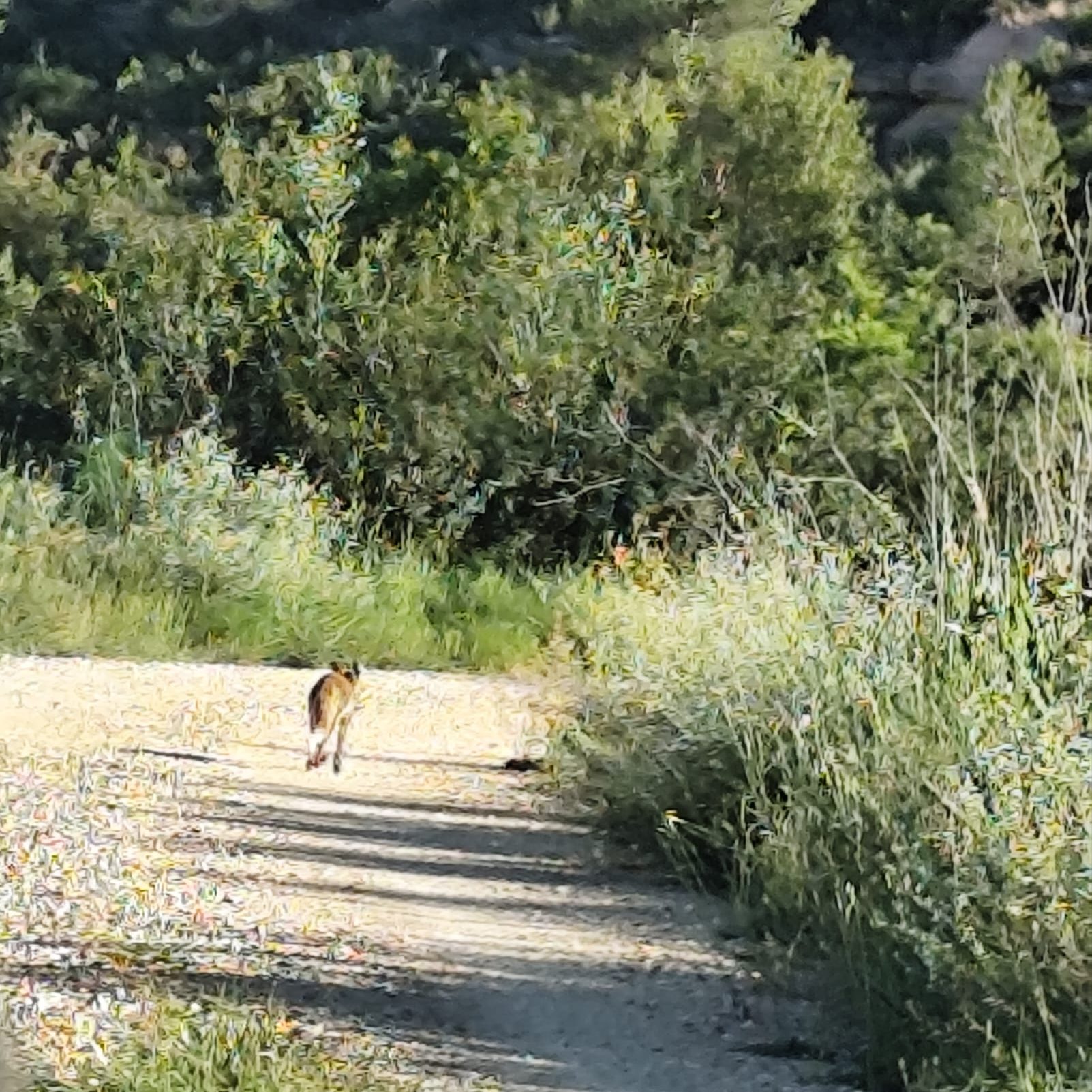
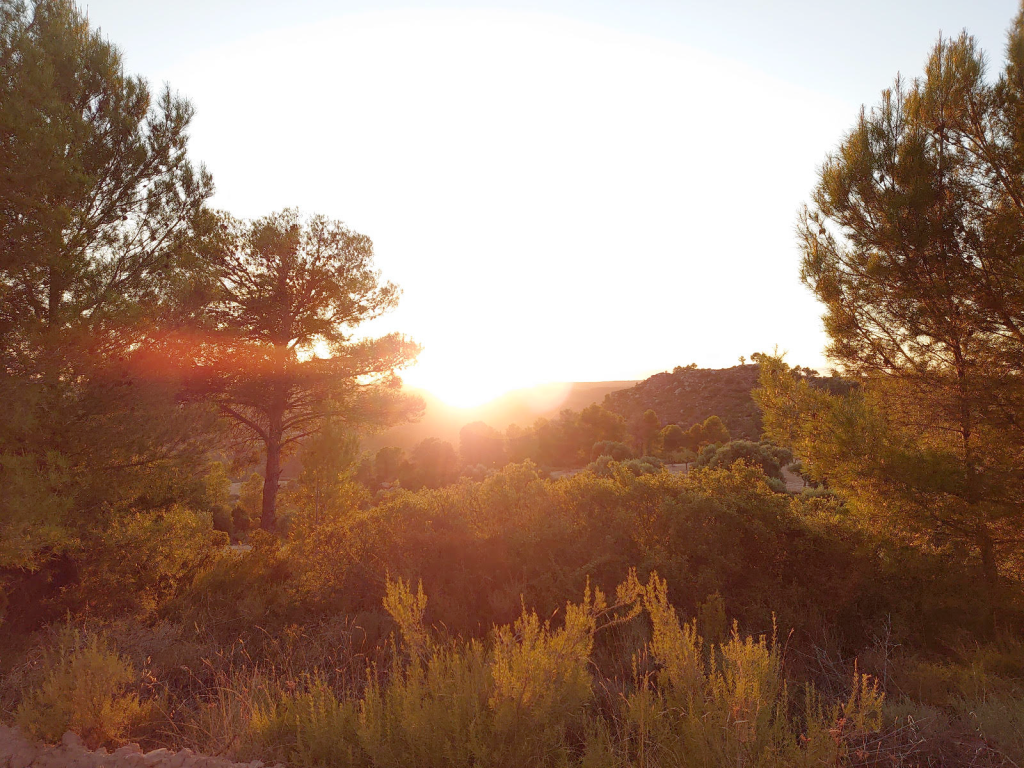
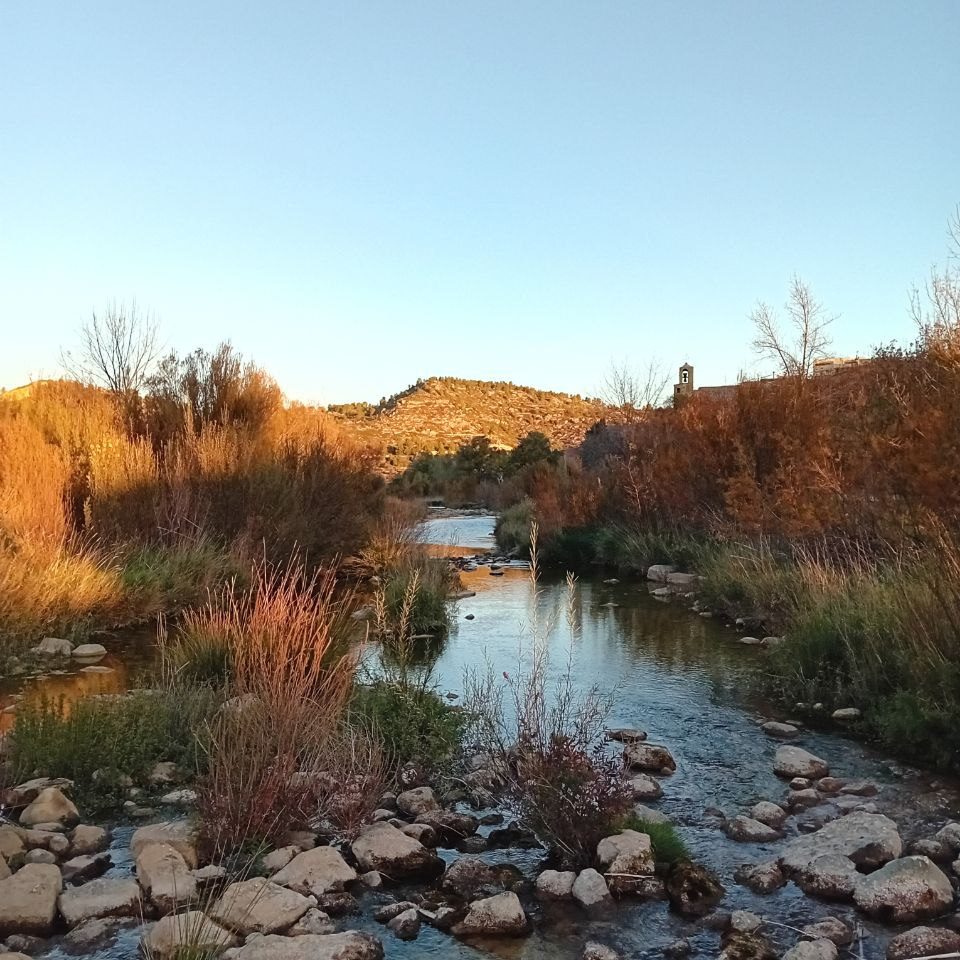
On January 25th, just days after Storm Gloria had drenched the region, an excited group gathered in the Rovira Valley.
In muddy boots – and sometimes barefoot when those boots got swallowed in mud – Lou guided us through the land and buildings of the valley and we imagined what could be.
Then, you might recall – a pandemic hit. The world slowed down.
We explored more funding pathways – even when COVID stalled momentum.
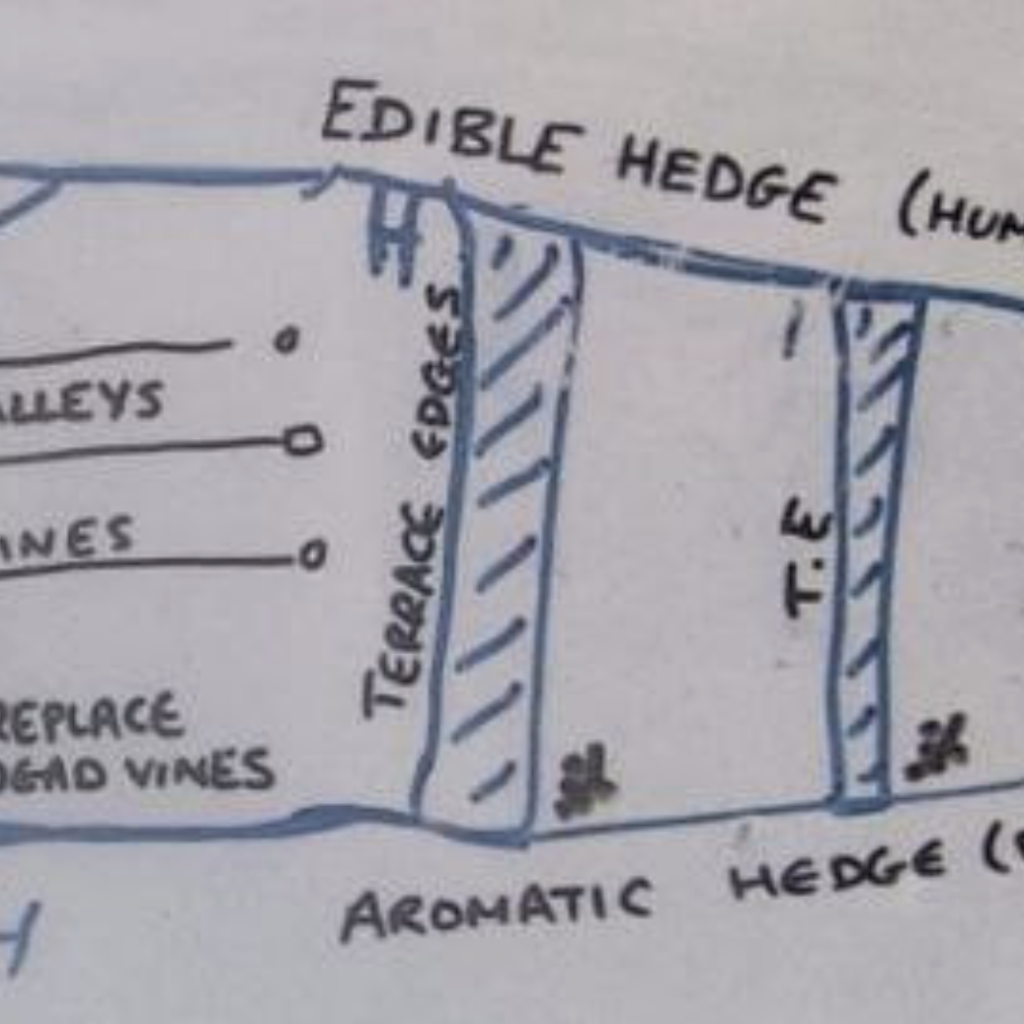
And when people could gather again, Lou, Nick and a small network of agroecology experts created the first regenerative agroforestry design for Manuel and Benita’s vineyard.
They imagined:
Vines interplanted with fruit and nut trees
Support species fixing nitrogen and creating windbreaks
Water captured and slowed
Soil regenerating year by year
2020-2022 – Researching, Practicing, Refining
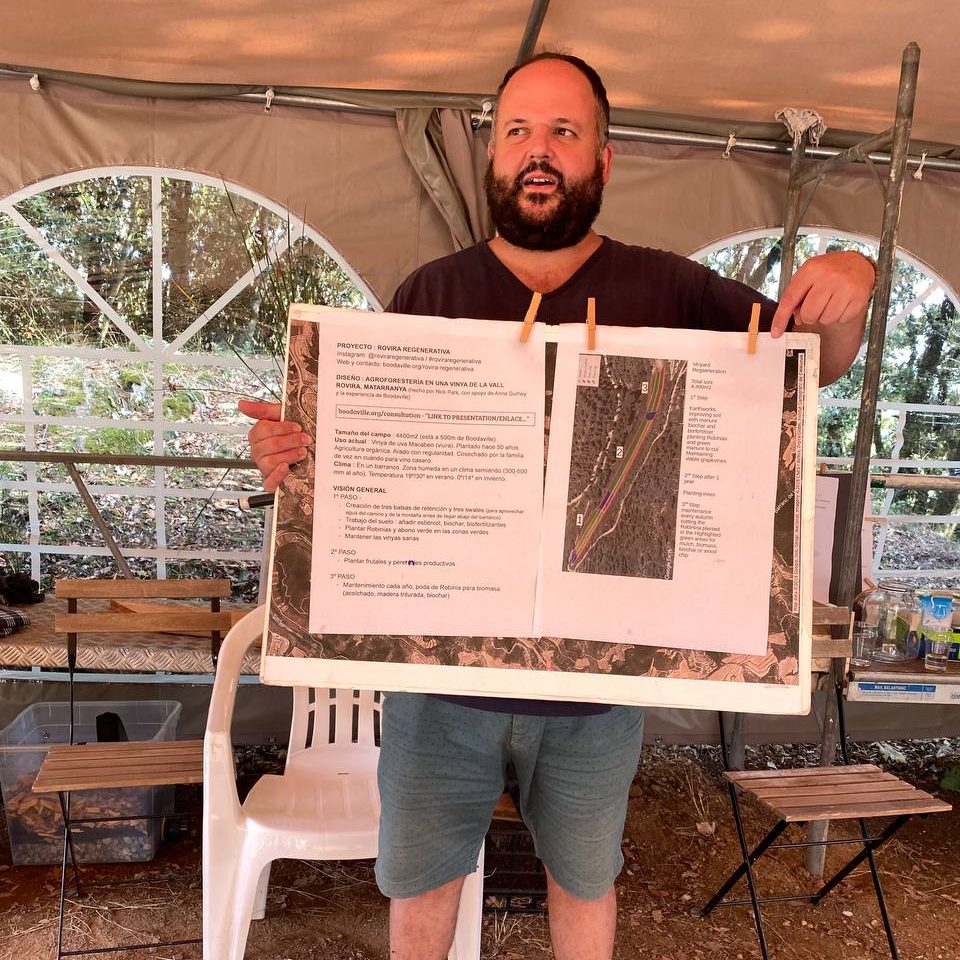

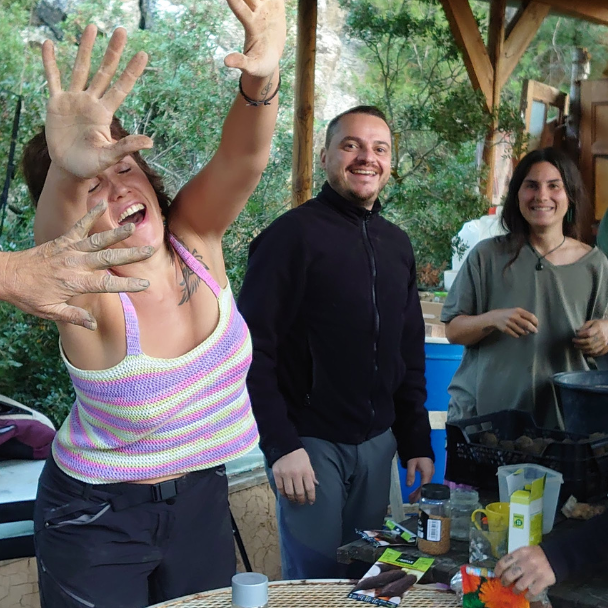
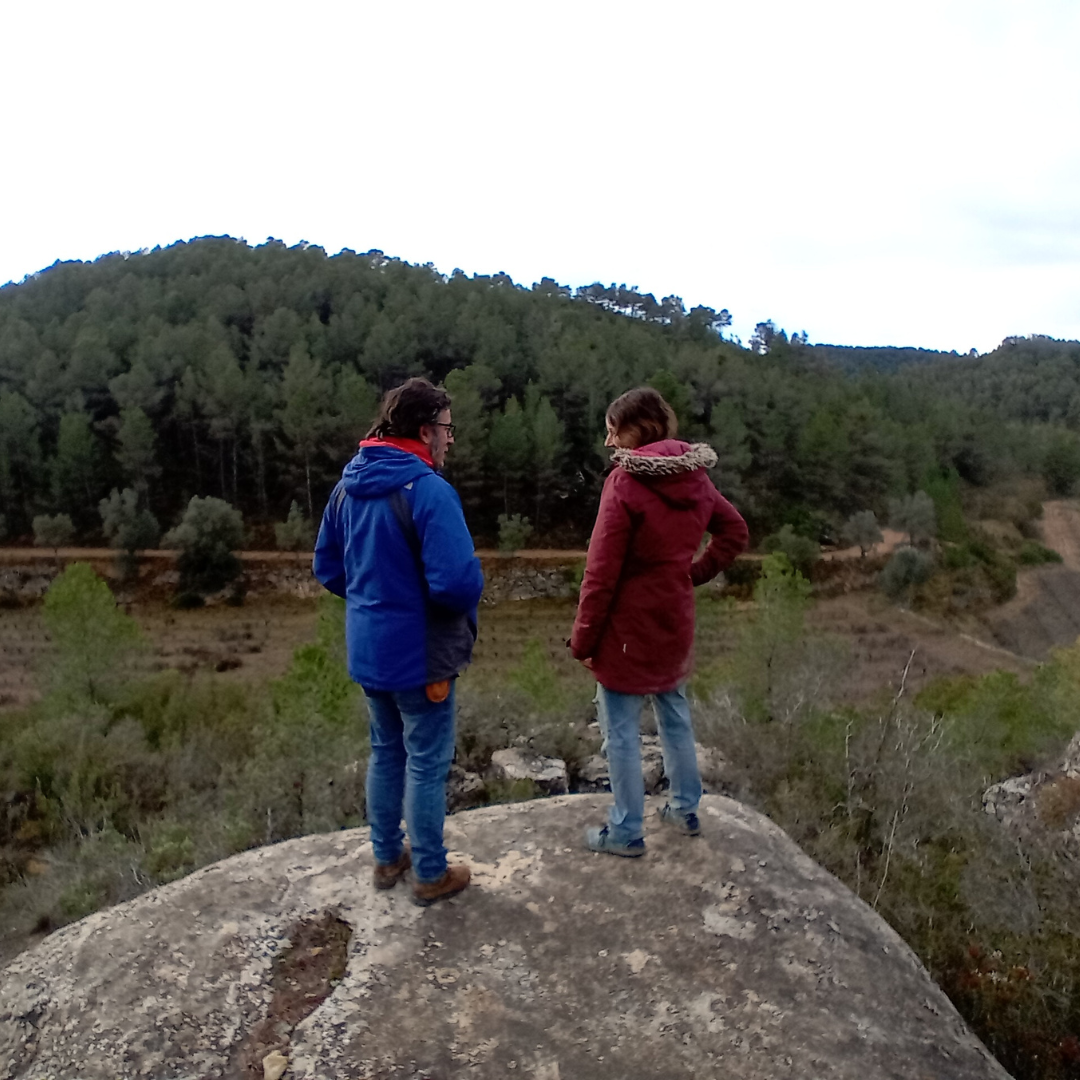
Even without secure access to a particular site, we began – doing, observing, reflecting.
We spoke with neighbours about land access – the vineyard was only one of many options.
We explored funding applications with new and old contacts.
Drafted proposals. Refined our thinking.
Practicing on abandoned terraces
Meanwhile, abandoned olive terraces around Boodaville became our testing ground.
Through multi-day, hands-on learning experiences, we and small groups of experts and visitors:
- Built swales to improve water catchment
- Planted apple, pear and nut trees
- Added support species for nutrients and wind protection
- Experimented with seed bombs and soil restoration
- Beginning to host educational weekends regularly
With every visit, we improved how we worked together and included others in the process for their learning – facilitating collective decision-making, blending practical work with reflection, and balancing work in the field with shared meals and river swims.
Sharing our design for feedback
Our vineyard agroforestry design was also presented publicly at BIORNE 2021. With feedback from peers, it evolved and strengthened.
Resilience isn’t built in perfect conditions. It’s built by adapting.
2022 – The Whirlwind Grape Harvest
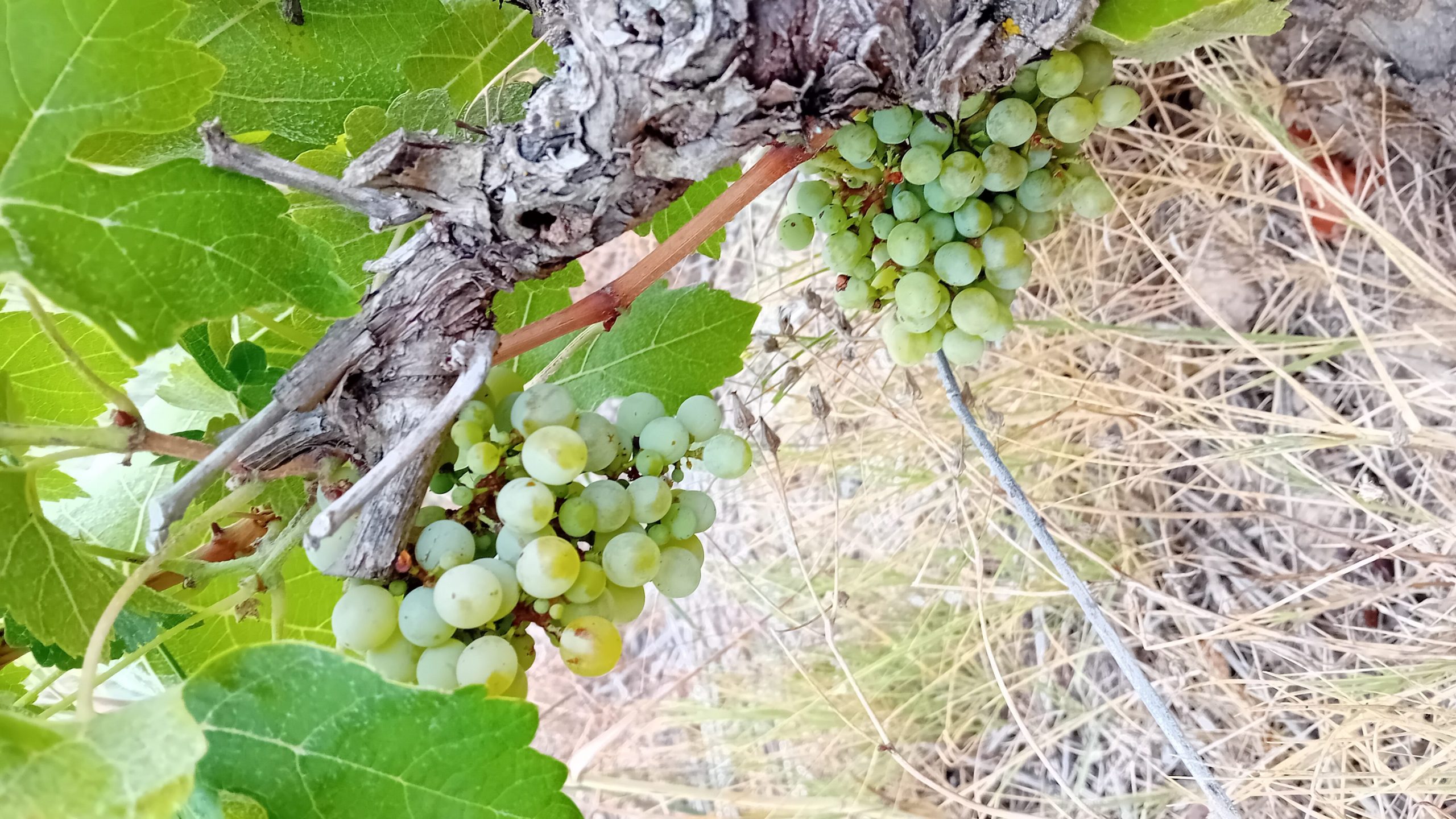
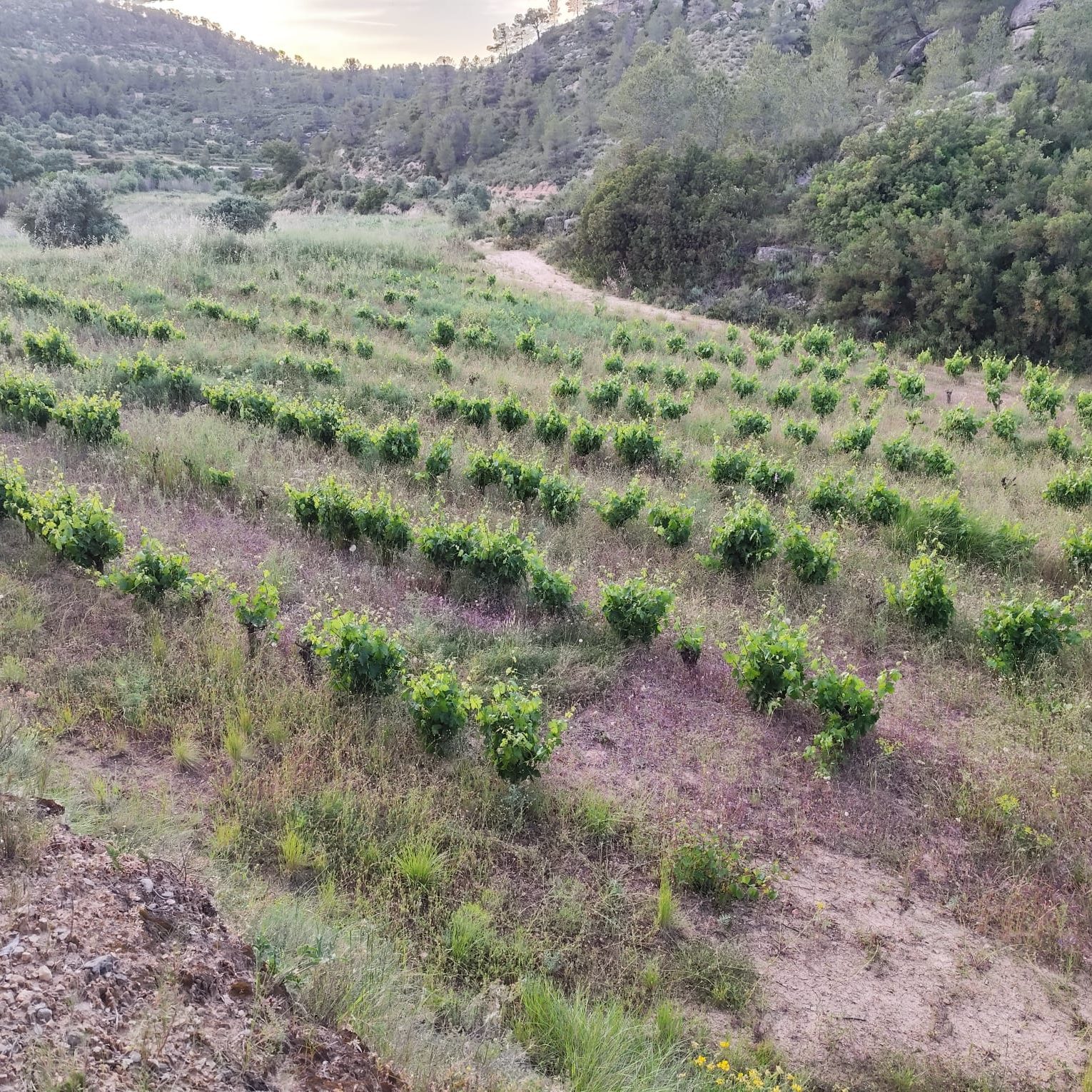
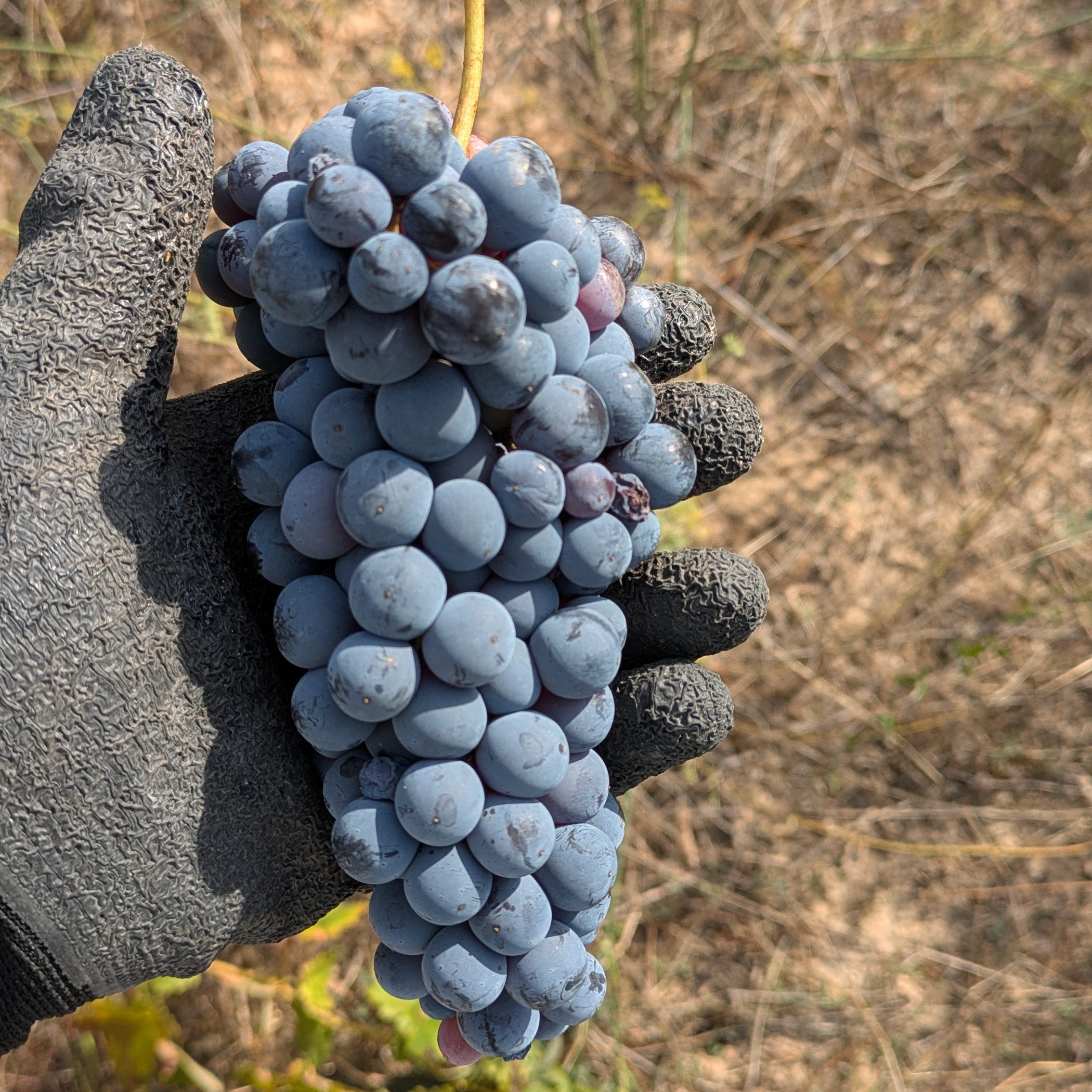

Then opportunity knocked.
Our neighbours, Benita and Manuel, had retired. Their 2-hectare vineyard had been unharvested for two years. Grapes hung heavy on the vines, and there was a two-week window before they would be lost.
Lou asked if we could step in. They said yes.
Leaning on our network — Sam Miller, Yuri, Mike from Artesano Vintners and others — we made it happen.
In two intense weeks we:
- Harvested the grapes
- Produced hundreds of bottles of wine
- Managed logistics from field to fermentation
- Strengthened local winemaking relationships and supported them
It was messy. Exhausting. Exhilarating.
2023 – We Add Thousands of Trees
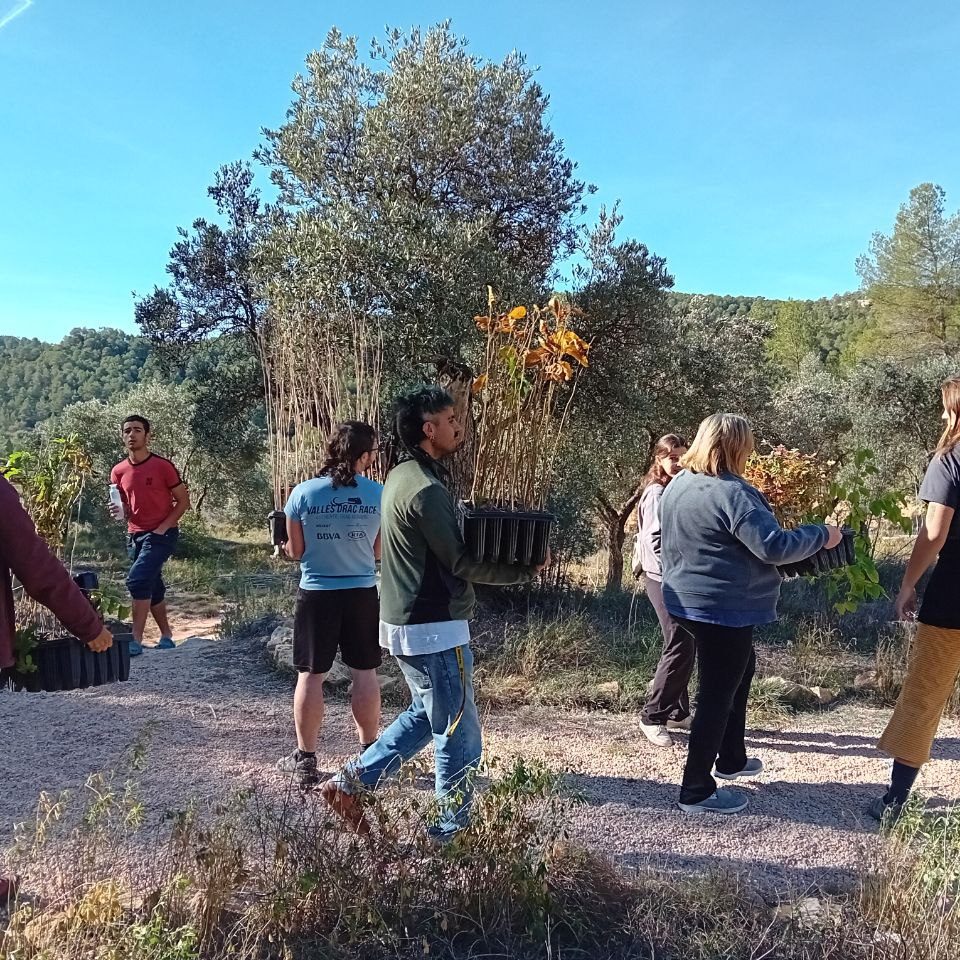
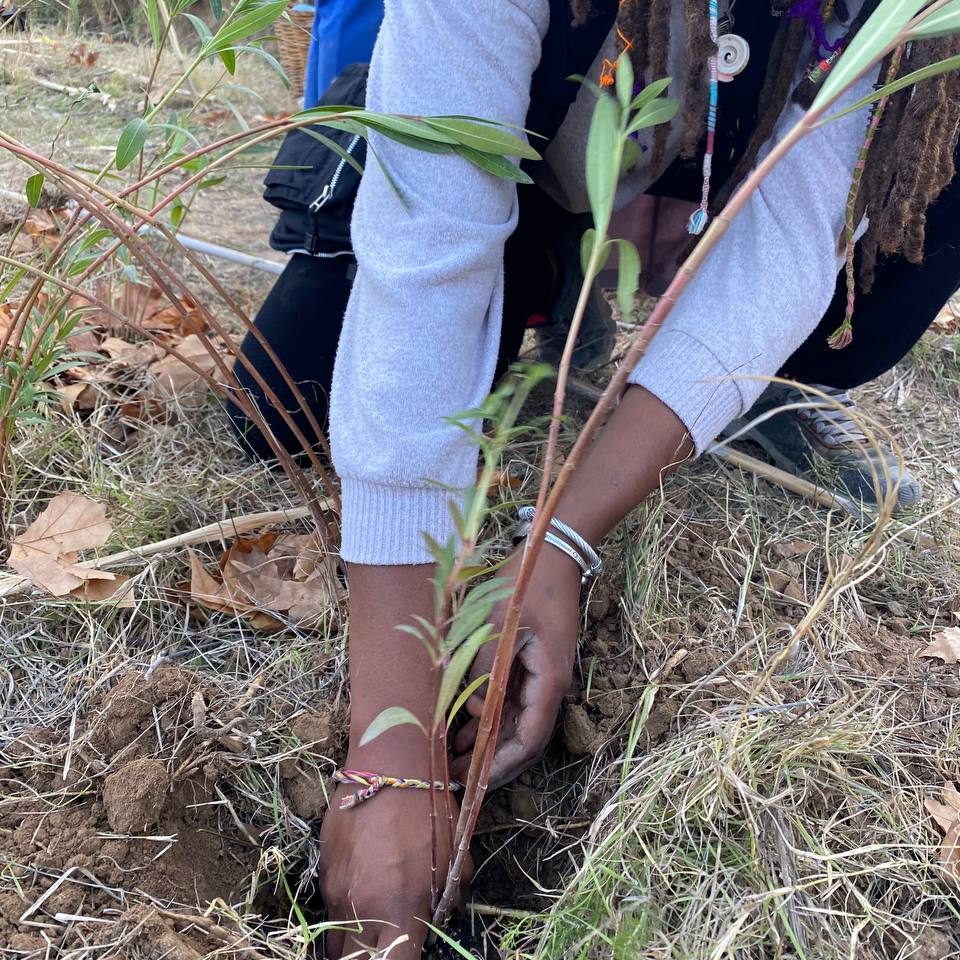
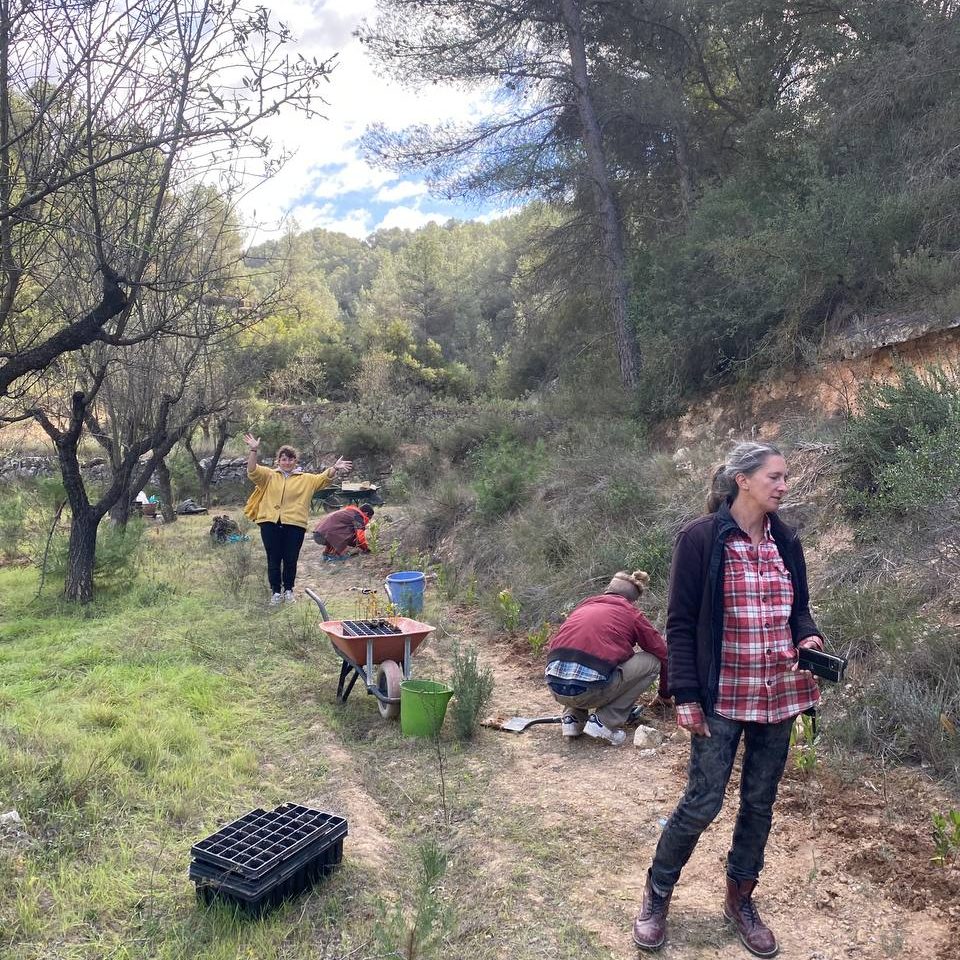
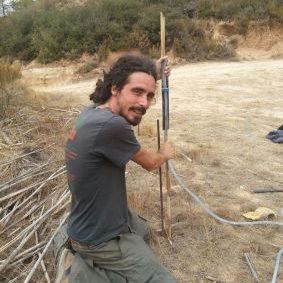
Through the Life Terra project, we received 1,500 tree seedlings — far more than the 500 we expected.
Over five days, with dozens of participants, in the vineyard we planted 500 food-producing trees (apple, pear, fig, plum, almond, hazelnut, and more) and 1,000 support species.
These trees would not be irrigated or hand watered. So we planted carefully:
- On shaded, wind-protected edges near the ravine (barranco)
- With biochar and starter watering
- With thick mulch
- Food trees clustered among support species
This marked the true beginning of agroforestry implementation in the vineyard.
We also:
- Conducted soil testing and ecological studies
- Produced and shared around 250 bottles of wine
- Formalised our “Regenerative Weekends”
The vineyard was no longer just vines. It was becoming a system.
2024 – We Become Vineyard Stewards


In 2024, Benita and Manuel entrusted us with full stewardship.
There was no harvest. It was the second year of drought. The nearby Algars River had become a series of puddles.
But we gained something valuable: a full calendar year to learn the vineyard, season by season.
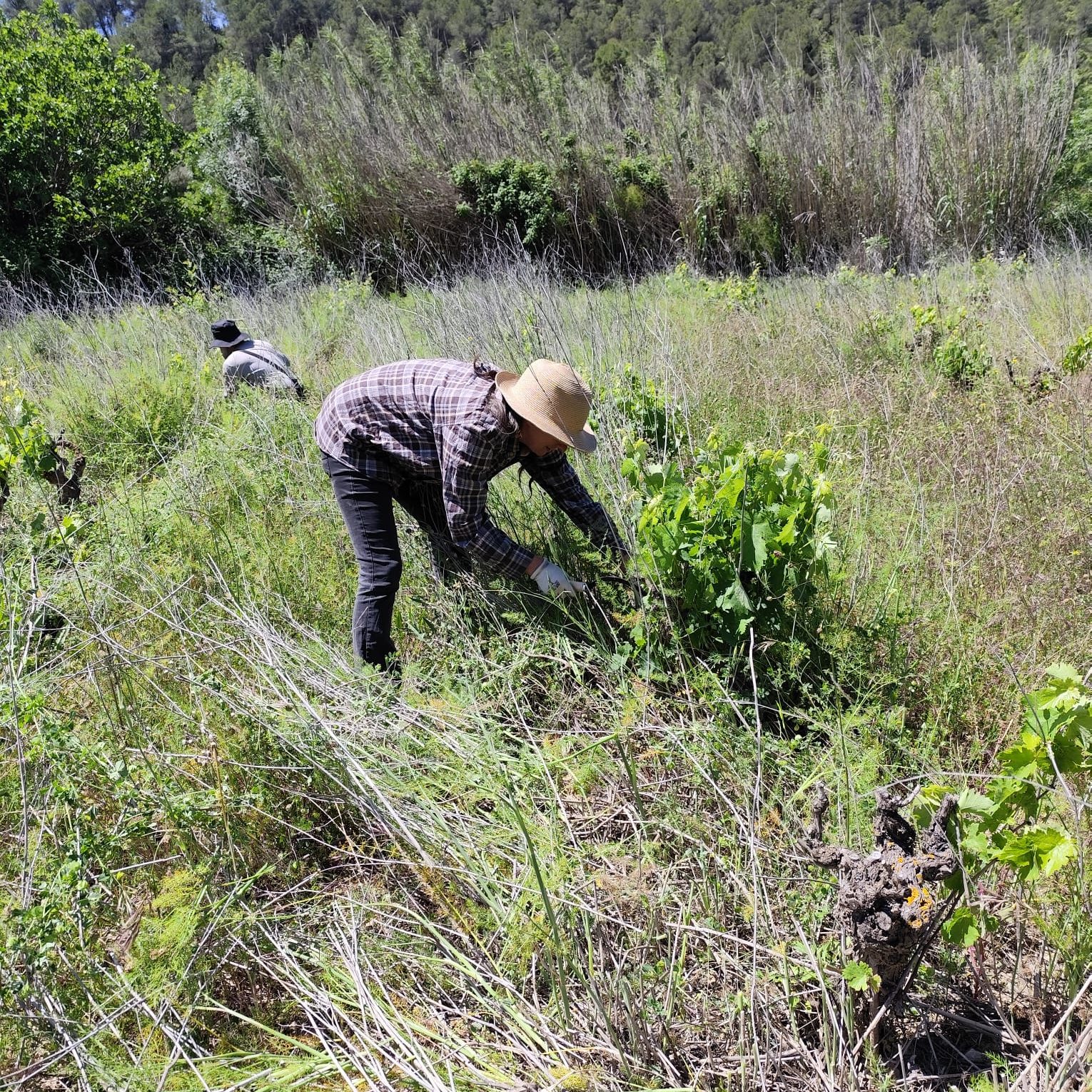
We pruned.
After four years without care, the two hectares of vineyard were completely overgrown. Benita, the owner, came to show us how she prunes, alongside an expert from the Penedès. She told us how her father and grandfather had farmed this land before her, and how painful it was to see it neglected.
But she also smiled when she saw us — and the visiting learners — out in the field, working steadily, vine by vine. Bit by bit, the chaos lifted, and the landscape began to breathe again.
We added more life.
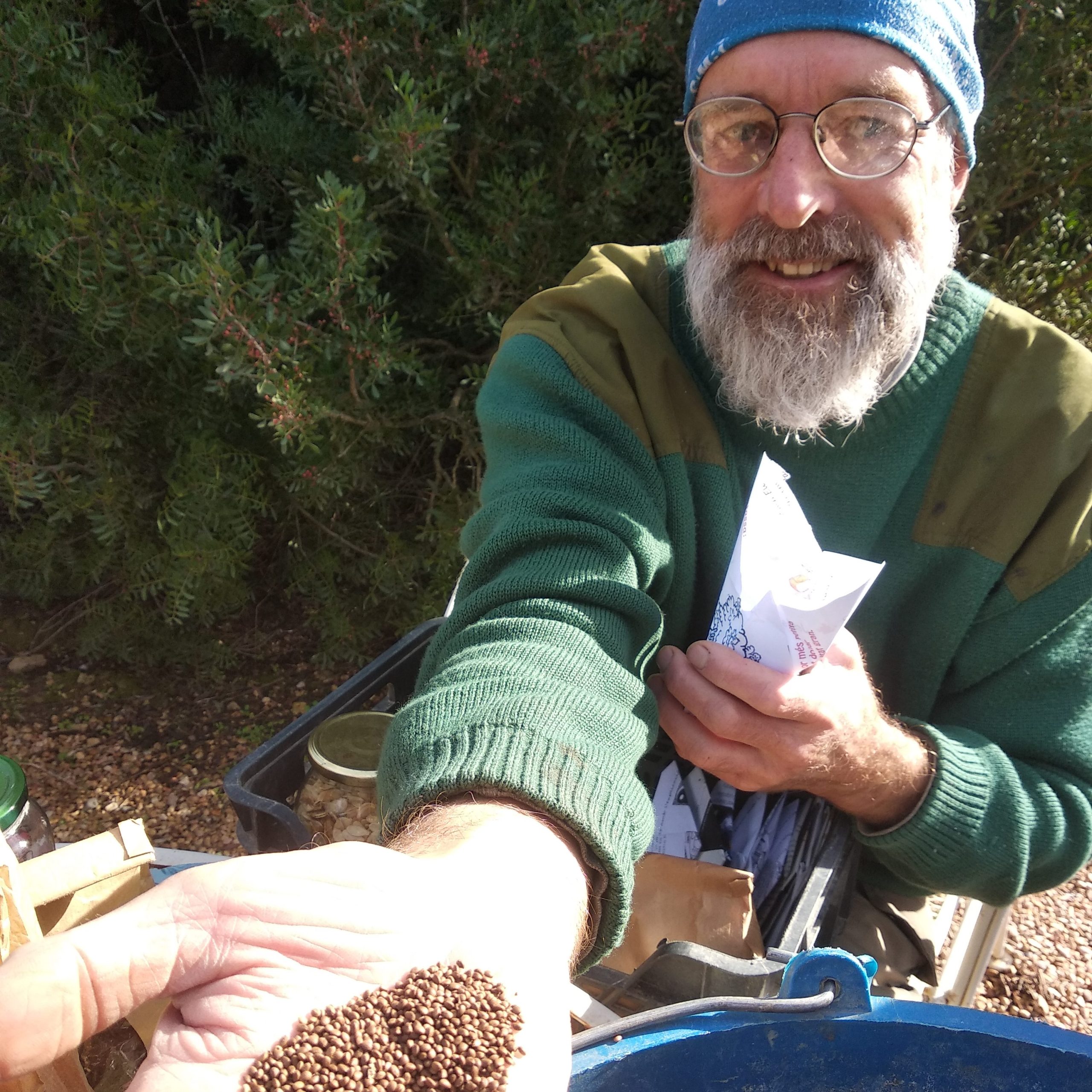
As a natural biofertiliser, we sowed diverse seed mixes designed by our friend Sam Miller and his ecology network. Nick is a biochar expert and we began making our own biochar annually on a neighbour’s farm with the right facilities.
Around the same time, we discovered a new neighbour with chemical-free Spanish Mustangs — including the first Spanish Mustang stallion born on Spanish soil in over 300 years.
Rachel from Windchaser Ranch arrived with trailers full of rich, healthy manure from these horses, and together we spread it across the vineyard — returning nutrients to the soil in the most grounded way possible.
Tall, dense fennel grows across more than half the vineyard. Instead of clearing it away, we experimented with chop-and-drop – cutting the fennel and leaving it directly on the dry, cracked soil. As it decomposes, it feeds the earth, protects the surface from sun and wind, and helps the ground begin to hold moisture again.
We acted collectively and openly.
We included dozens of other people throughout the year – experts and learners – through Regenerative Weekends. They didn’t just learn farming practices, they experienced how we debate, make decisions, the factors that permaculture and regenerative agriculture make us consider, and how to balance work and fun in nature.
By year’s end, we had:
- A strong understanding of vineyard care within our means
- A proven structure for Regenerative Weekends to spread the learning
- Surviving young trees – planted in drought, still alive
Resilience means continuing — especially in hard years.
2025 – Foundations Strengthen


Then the rain came.
With a full year of hands-on learning behind us, we moved through all four seasons with more confidence and care – continuing to include others in the work and decision-making.
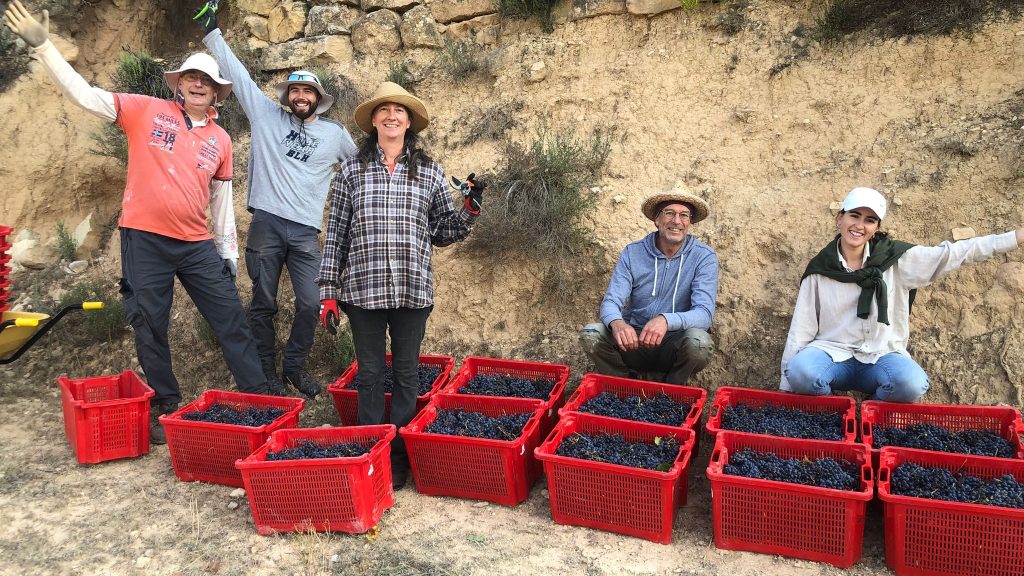
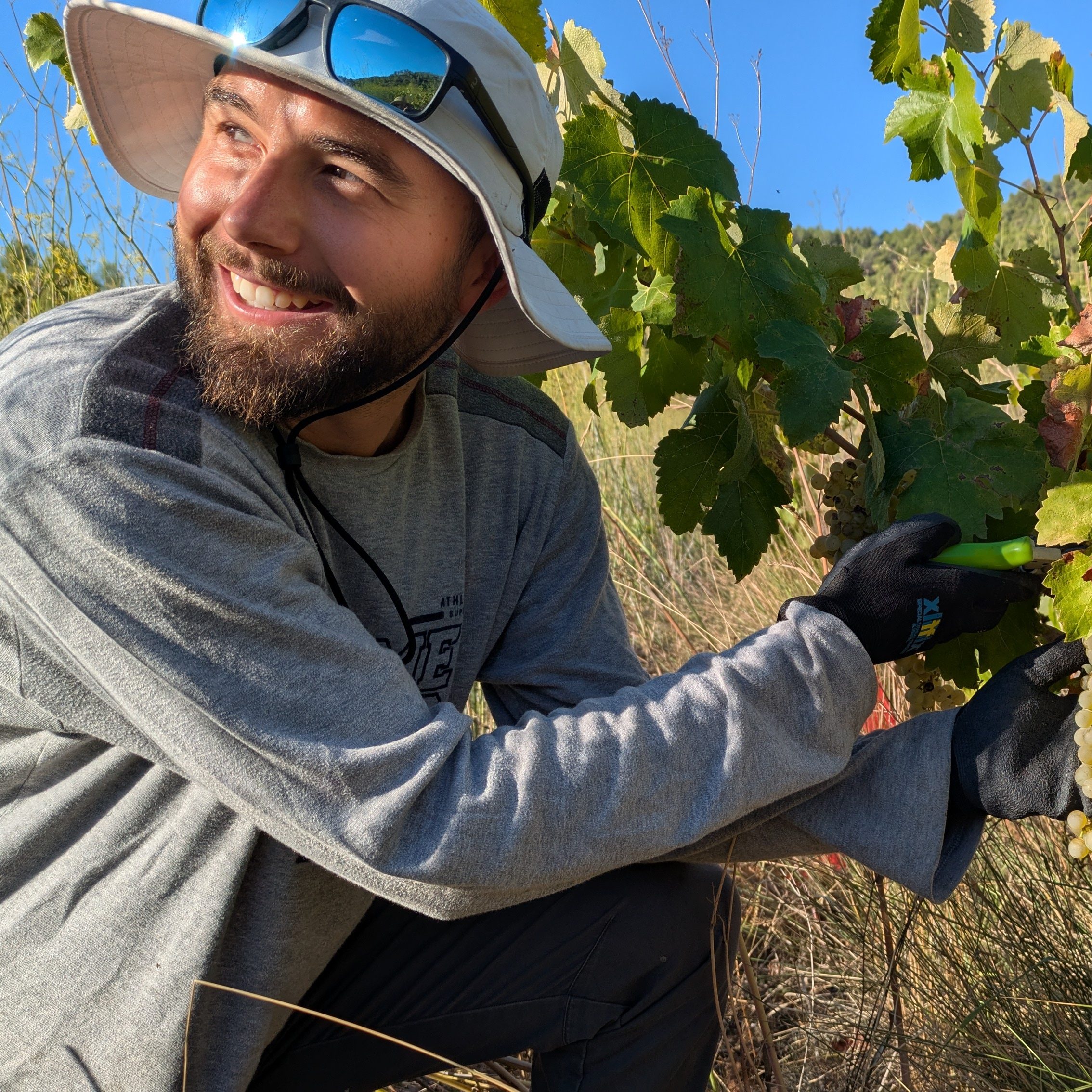
We harvested more grapes and made more wine than ever before – this time not in a last-minute whirlwind, but in a practiced rhythm.
We hosted five Regenerative Weekends, each different, yet following a clearer structure. With every gathering, we became more organised, more capable, more at ease.
Our agroforestry design was updated again with visiting experts, shaped not just by theory but by years of observation and lived experience. We also reached an agreement with hydrology specialists at La Casa Integral to design a water system for the vineyard in May 2026 – a crucial step to capture more rain and support greater biodiversity and food production.
In nearby Caseres, we found land by the river for a future nursery and community garden – a space to share seeds, skills and inspiration more widely.
We harvested and pressed olives with neighbouring regenerative farmers.
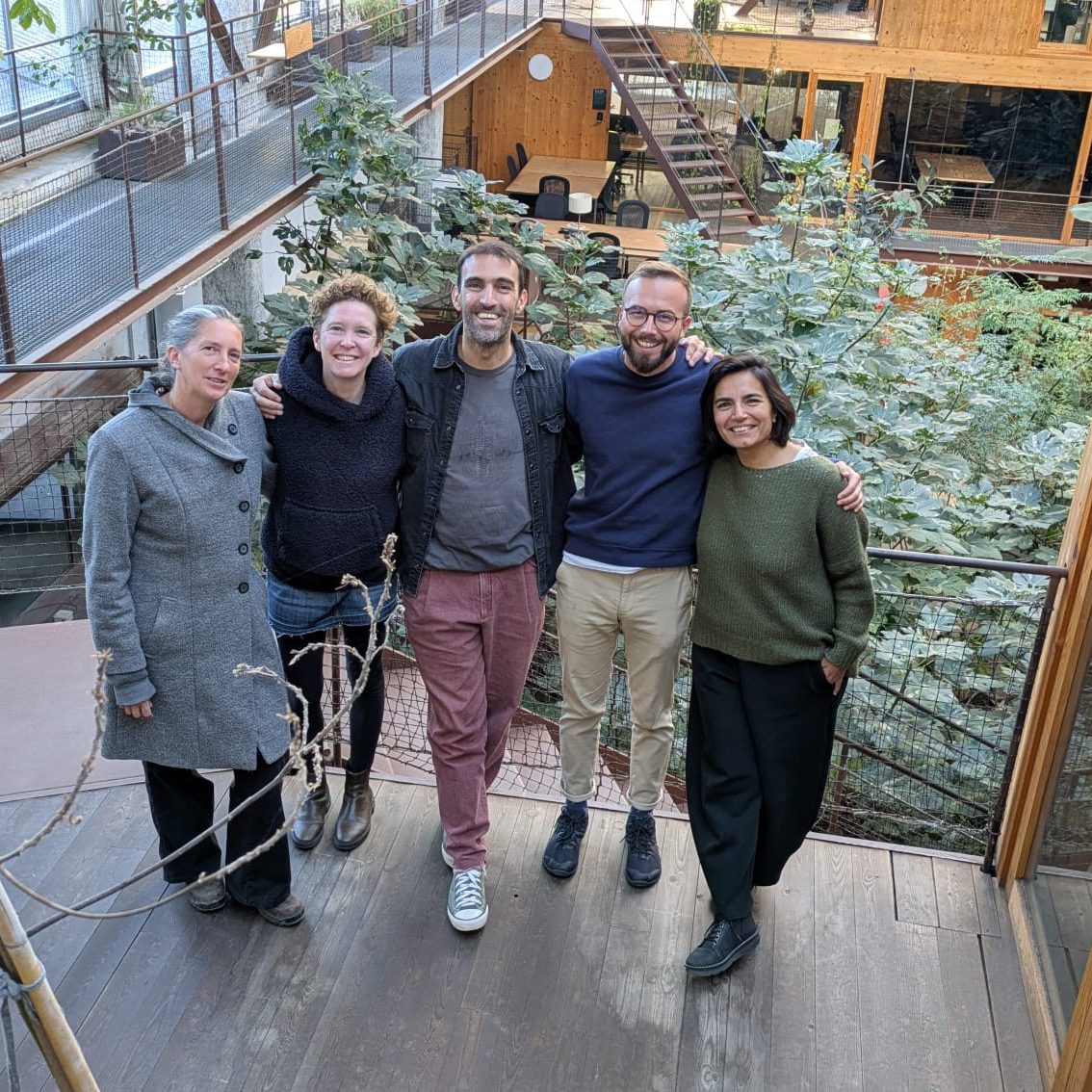
Robin, Pedro and Maru of Cardúmenes joined as integral members of the Boodaville and Rovira Regenerativa teams.
And our young trees are strong after surviving their first hard year and happier now with all the rain!
The system feels stronger. Simpler. More alive.
2026 – Ready for big steps
Our CROWDFUNDING CAMPAIGN is essential to truly launch our resilient, self-sustaining food system. We now have the right team, network, design and practices – we just need the funds…
To secure continued access to the land.
Capture more water.
Add more species and food.
Open the nursery.
Inspire and educate more people.
And ensure this resilient food system truly thrives.